

According to Grand View Research, the global smart lock market is expected to grow at a 20.1% CAGR from 2026 to 2033, reaching approximately USD 14.3 billion by 2033. Growing adoption of connected access control, smart-home technology, and digital property management is creating new opportunities across residential and commercial markets. At the same time, B2B buyers are becoming more focused on supplier reliability, compliance, scalability, and long-term value rather than product price alone.
2026 Market Changes: From Smart Locks to Connected Access
By application, the residential segment dominated the market, accounting for 46.6% of revenue share in 2025. Growing smart-home adoption, increased security awareness, remote access, and the expansion of short-term rentals continue to support residential demand.
However, the commercial segment is expected to achieve the highest CAGR from 2026 to 2033. Businesses increasingly require centralized access management, user control, audit records, and scalable solutions across multiple locations. This shift is making smart locks an increasingly important part of broader access-control systems.
For manufacturers and suppliers, the market is therefore moving from individual smart lock products toward more connected and project-oriented solutions.
How B2B Smart Lock Procurement Is Changing
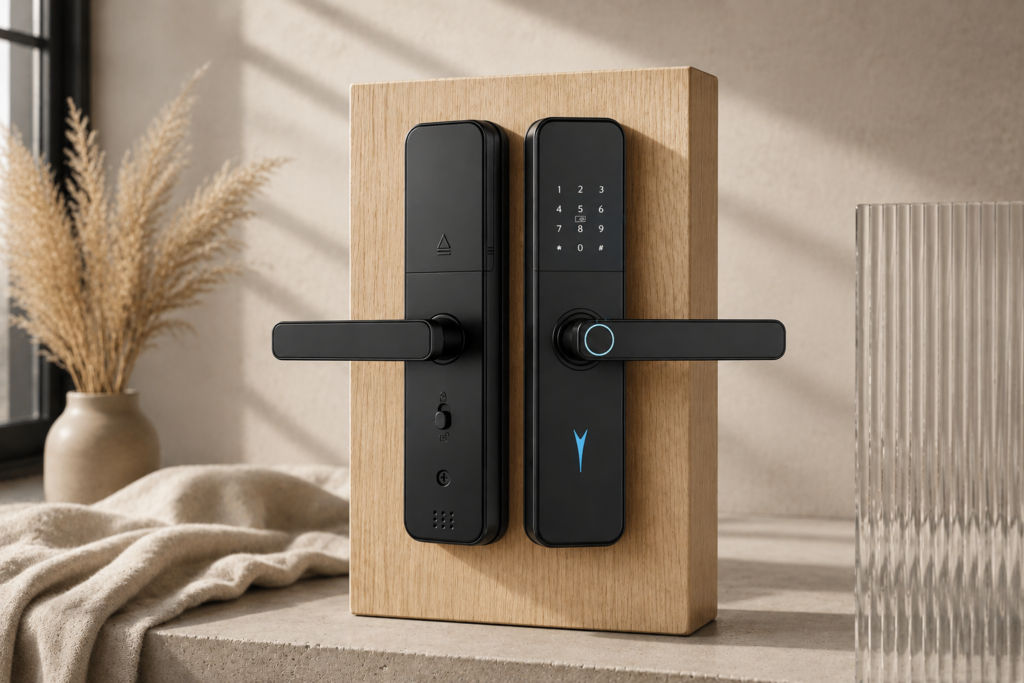
For B2B buyers, the lowest quotation does not necessarily represent the lowest overall cost. Production inconsistencies, installation issues, delayed delivery, and insufficient technical support can increase project expenses.
Experienced buyers are paying greater attention to:
- Manufacturing consistency and quality control
- Production capacity and delivery stability
- Product compatibility with project requirements
- OEM/ODM capabilities
- Certifications and market compliance
- Technical documentation and supplier support
- Long-term supplier reliability
As a result, smart lock sourcing is gradually shifting from a simple product transaction toward a longer-term manufacturing partnership.
What Makes an Enterprise-Grade Smart Lock?
Enterprise-grade does not simply mean a smart lock with more functions. For large-scale B2B projects, it means the product and supplier can consistently meet project requirements.
Reliability is essential when products are deployed across multiple properties. Scalability is equally important, as manufacturers must maintain specifications and quality when orders increase from trial quantities to larger deployments.
Buyers should also consider compatibility with different door structures, installation conditions, and existing access-control systems. Beyond the product itself, technical documentation, spare parts, communication, and after-sales support can affect the entire product lifecycle.
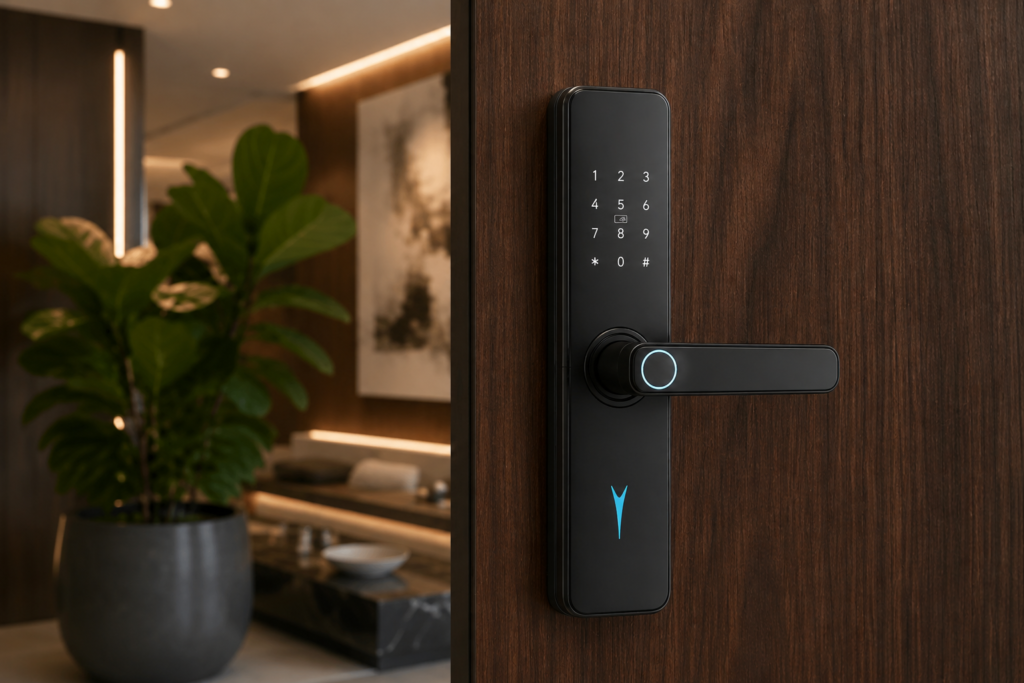
Compliance, Standards, and Technical Considerations
Compliance is an important part of international smart lock sourcing. B2B buyers should verify that certification documents apply to the specific product model and target market rather than relying only on certification logos.
Common certifications considered during international sourcing include CE, FCC, and RoHS, while ISO 9001 relates to a manufacturer’s quality management system. Buyers should evaluate these certifications together with product testing, material quality, environmental requirements, installation conditions, and manufacturing consistency.
For international projects, appropriate documentation can help reduce sourcing risks and support smoother market entry.
What B2B Buyers Will Prioritize Next
Smart lock sourcing is expected to focus increasingly on integration, scalability, customization, and supplier capability.
Distributors, brands, contractors, and project developers are looking for manufacturers that can provide stable production while adapting products to different market and project requirements. OEM and ODM capabilities will therefore remain important as buyers seek solutions beyond standard off-the-shelf products.
The competitive advantage of manufacturers will not come simply from adding more functions. It will increasingly depend on combining R&D, manufacturing quality, customization, compliance, and project support.
Building Long-Term Value Through B2B Smart Lock Manufacturing
For B2B buyers, the right supplier is not necessarily the one with the largest catalog or lowest price. A reliable manufacturing partner should be able to understand project requirements and maintain consistent quality throughout the supply cycle.
Foshan Xinyunda Intelligent Equipment Co., Ltd. provides smart lock R&D and manufacturing capabilities for international B2B customers. As the industry moves toward connected and project-oriented access solutions, manufacturers with strong R&D, production, customization, and quality-control capabilities will be better positioned to meet changing market demands.
For global B2B buyers, the 2026 sourcing priority is clear: choose a smart lock supplier based not only on the product, but also on technology, manufacturing capability, compliance, and long-term support.